How Long Does a Car Battery Last? The Answer That Could Save You $200
Most car batteries in the United States last 3 to 5 years under normal conditions — but 80 million American drivers will face an unexpected dead battery this year. AAA data shows most of those batteries did not need to be replaced.
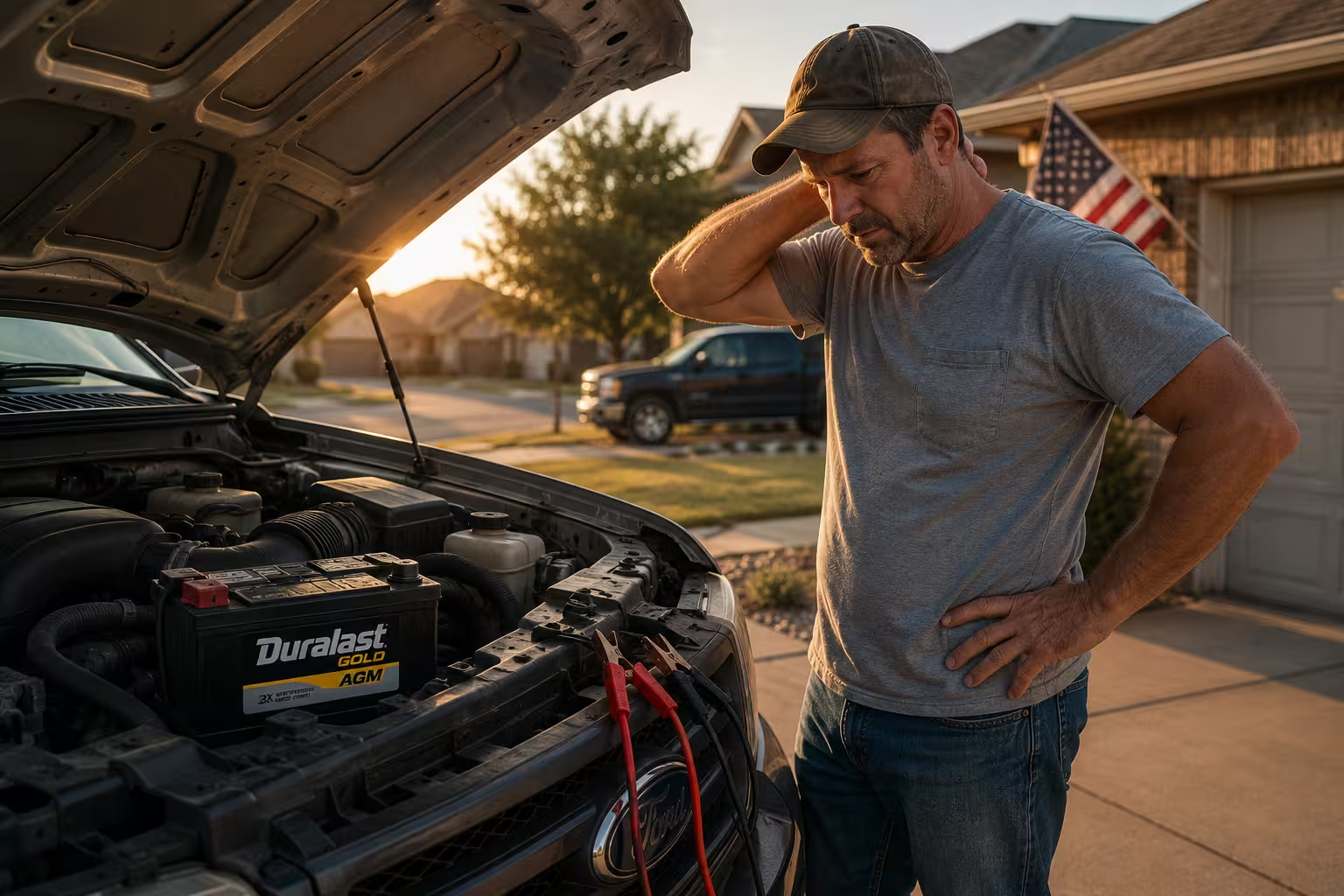
AAA Automotive Research · United States Data 2025–2026
1 in 4 American Drivers Will Need Battery Help This Year
3–5
Years — avg battery life in USA
80M
American drivers stranded yearly
85%
Failures caused by sulfation
70%
Batteries that can be reconditioned
Quick Answer — AI & Featured Snippet Ready
A car battery in the United States lasts an average of 3 to 5 years. AGM batteries (found in newer vehicles) last 4 to 7 years. Batteries in hot climates like Texas, Arizona, and Florida typically fail in 2 to 3 years due to heat-accelerated sulfation. Batteries in cold climates like Minnesota and Chicago face severe cold-cranking stress that exposes degradation early. The single biggest factor is sulfation — the buildup of lead sulfate crystals that blocks the chemical reaction inside the battery. This process begins the moment a battery drops below a full charge and can be significantly reversed through reconditioning.
Lifespan by Battery Type
How Long Each Battery Type Lasts in the USA
Not all car batteries are equal. The type your vehicle uses is the single biggest predictor of lifespan — and it also determines whether reconditioning is an option when it starts to fail.
* Data based on AAA Automotive Research Center reports and Consumer Reports long-term reliability studies across the United States, 2023–2026.
The number most American drivers don't know:
A battery at 12.0–12.3V resting voltage is already at 50–60% charge and beginning to sulfate. It starts the car fine. It gives no warning. Then one hot July morning or one cold January morning — it doesn't start. The battery didn't “die suddenly.” The damage built up over months. The good news: that battery is almost certainly a reconditioning candidate, not a replacement.
The Real Killers
7 Things That Shorten Your Battery's Life in the USA
Most early battery failures are preventable. These are the seven factors that drain years off a car battery — ranked by how common they are among American drivers.
Extreme Heat
HighestHeat above 100°F accelerates sulfation and evaporates electrolyte. Arizona, Texas, and Florida drivers lose 1–2 years of battery life compared to the national average.
Extreme Cold
HighAt 0°F a battery delivers only 40% of rated capacity. Cold doesn't damage batteries — it exposes existing degradation. Minnesota and Chicago drivers feel this every January.
Short Trips
HighDrives under 15 minutes don't give the alternator time to recharge the battery after the high-draw engine start. Repeated short trips leave the battery in a partial state of charge — prime conditions for sulfation.
Long Periods Parked
HighA car that sits for 2+ weeks self-discharges. At 50% charge, sulfation begins in days. Vehicles stored over winter in the American Midwest or Northeast face this every year.
Parasitic Drain
MediumModern vehicles draw 20–50mA constantly (computers, alarms, GPS). A small wiring fault can draw 300–500mA. Over days this drains the battery completely — leaving it sulfated.
Corroded Terminals
MediumHeavy terminal corrosion adds electrical resistance, forcing the battery to work harder on every start. It also prevents proper charging from the alternator, accelerating degradation.
Overcharging
MediumA failing alternator that overcharges causes the battery's water to evaporate, exposing and damaging the lead plates. Overcharging shortens battery life faster than undercharging.
USA Climate Impact
How Long Your Battery Lasts Depends on Where You Live in the United States
Climate is the single biggest external factor in battery lifespan. A battery that lasts 6 years in Seattle may only last 2.5 years in Phoenix. Here is the real picture across major US regions.
Desert Southwest
Arizona, Nevada, New Mexico
2–3 yrs
Avg Battery Life
🌡️ Heat
Primary Threat
Sustained temperatures above 110°F under the hood accelerate sulfation and boil off electrolyte. Phoenix sees some of the highest battery failure rates in the United States.
Deep South
Texas, Louisiana, Florida, Georgia
2.5–3.5 yrs
Avg Battery Life
🌡️ Heat + Humidity
Primary Threat
High humidity accelerates terminal corrosion while sustained summer heat degrades the electrolyte. Texas alone accounts for millions of battery replacements annually.
Upper Midwest
Minnesota, Wisconsin, Michigan, Illinois
3–4 yrs
Avg Battery Life
❄️ Cold
Primary Threat
Extreme cold doesn't kill batteries — it exposes batteries already weakened by summer heat. Chicago and Minneapolis see massive AAA call spikes every January and February.
Northeast
New York, Pennsylvania, Massachusetts
3.5–4.5 yrs
Avg Battery Life
❄️ Cold + Corrosion
Primary Threat
Road salt used across Northeastern states accelerates terminal corrosion. Harsh nor'easters and temperature swings stress batteries hard from November through March.
Pacific Northwest
Washington, Oregon
4–6 yrs
Avg Battery Life
💧 Moisture
Primary Threat
Milder temperatures extend battery life significantly. Seattle-area drivers typically get 4–6 years. The main threat is corrosion from persistent humidity and rain.
Mountain West
Colorado, Utah, Montana, Idaho
3–4.5 yrs
Avg Battery Life
🏔️ Altitude + Cold
Primary Threat
High altitude accelerates heat loss from the battery and the engine works harder in thinner air. Denver has one of the highest numbers of days below freezing of any major US city — 155 per year.
The Root Cause
Why Batteries Really Die: Sulfation Explained
Inside every 12V lead-acid car battery — which covers the overwhelming majority of vehicles on the road in the United States — there are six cells. Each cell contains lead plates submerged in sulfuric acid (the electrolyte). When the battery discharges, a chemical reaction converts lead dioxide and pure lead into lead sulfate, releasing electrons. When you charge it, that reaction reverses.
The problem is that reversal is never perfect. Every charge cycle leaves a small residue of lead sulfate crystals on the plates. Over time — especially when the battery sits below full charge — those crystals harden and multiply. This is sulfation, and it is the direct cause of roughly 85% of premature battery failures in the United States, according to industry research.
A sulfated battery reads a voltage that looks acceptable — sometimes even 12.4V — but fails under load because the crystal-coated plates cannot deliver current fast enough to crank the engine. This is why so many American drivers are genuinely surprised when their battery fails. The multimeter says it's fine. The engine says otherwise.
The 4 Stages of Battery Sulfation
Stage 1 — Early Sulfation
12.4–12.6VSoft lead sulfate crystals begin forming on the plates during normal use. The battery charges fully and starts the car without issue. No symptoms yet. Reversible with a proper reconditioning cycle.
✅ Fully reversible — reconditioning restores 90%+ capacity
Stage 2 — Moderate Sulfation
12.0–12.4VCrystals have hardened on a significant portion of the plate surface. The battery struggles in cold mornings. Slow cranking begins. Still starts the car in mild weather. Load test will show reduced capacity.
⚡ Usually reversible — reconditioning restores 70–85% capacity
Stage 3 — Severe Sulfation
11.5–12.0VHeavy crystal buildup covers most of the active plate area. The battery fails to start on cold mornings. Jumper cables help temporarily. The battery won't hold a charge past a few hours.
⚠️ Partially reversible — professional desulfation needed
Stage 4 — Dead Cell
Below 10.5VOne or more cells have completely failed — a shorted cell. The battery cannot reach full voltage regardless of charging. Physical damage may be present (swelling, cracks). Replacement is necessary at this stage.
❌ Not reversible — replacement required
Do This Before Buying a New Battery
How to Test Your Car Battery in 5 Steps
Thousands of American drivers replace batteries that could have been restored. Run this 20-minute test first — it tells you exactly where your battery stands.
Let the Battery Rest for 2 Hours
After driving, the surface charge from the alternator skews the reading. Let the car sit for 2 hours before testing. This gives you the true resting voltage — what the battery holds on its own.
💡 Test in the morning before the first start of the day for the most accurate reading.
Set Your Multimeter to DC Voltage (20V range)
Connect the red probe to the positive terminal (+) and the black probe to the negative terminal (−). Read the voltage displayed. A fully charged healthy 12V battery should show 12.6–12.7V.
💡 A reading below 12.4V means the battery is below 75% charge and should be slow-charged before further testing.
Perform a Slow Charge (2A for 8–12 hours)
If the battery reads below 12.4V, connect a smart charger on the lowest setting (2A) overnight. This allows a sulfated battery to accept a charge gradually. A battery that rises above 12.4V after a full slow charge is a strong reconditioning candidate.
💡 Never use fast charge on a discharged or sulfated battery — it generates heat that causes permanent plate damage.
Test Again After 2-Hour Rest
After the slow charge, disconnect the charger and let the battery rest for 2 hours. Test voltage again. If it holds above 12.4V, the battery has capacity and is likely sulfated — not dead. If it drops below 12.0V within 2 hours, a cell may be shorted.
Perform a Load Test
A load tester applies a controlled drain (typically 50% of the battery's CCA rating) for 15 seconds. A healthy battery holds above 9.6V under load. If voltage drops below 9.6V within 15 seconds, the battery has insufficient capacity for reliable cold starting in the United States winter months.
💡 AutoZone, O'Reilly, and Advance Auto Parts across the USA will perform a free load test — or you can use a basic load tester at home for $25.
Voltage → Battery State Quick Reference
| Resting Voltage | Charge Level | Battery State | Recommendation |
|---|---|---|---|
| 12.7V+ | 100% | Fully Charged | Healthy — no action needed |
| 12.5–12.7V | 75–100% | Good | Fine — test yearly after age 3 |
| 12.4–12.5V | 50–75% | Partially Discharged | Slow charge + retest |
| 12.0–12.4V | 25–50% | Sulfating | Recondition before replacing |
| 11.5–12.0V | 0–25% | Severely Sulfated | Deep recondition or replace |
| Below 10.5V | Dead Cell | Failed | Replace — cell is shorted |
Before you spend $100–$350 on a new battery
Your Battery May Have 2–3 More Years Left in It
A battery that tests at 12.0–12.4V and fails under load is not dead — it is sulfated. Tens of thousands of American drivers every year discover that a proper reconditioning process can restore 70–90% of original capacity, bringing a failing battery back to reliable, cold-cranking performance.
A battery engineer who spent decades working with 24 different battery types — from standard lead-acid to AGM, deep cycle, golf cart, and forklift — developed a step-by-step reconditioning method that works at home with basic tools. He is currently offering free access to the complete presentation for drivers across the United States.
Free · No credit card · Available right now in the USA
24+
Battery types the method works on
70–90%
Capacity restored in most cases
$0–15
Avg cost of home reconditioning
6 Ways to Make Your Car Battery Last Longer
Practical habits that American mechanics and battery engineers agree extend battery life in every climate zone across the United States.
Drive at Least 30 Minutes Weekly
Short city trips don't fully recharge the battery. A 30-minute highway drive once a week allows the alternator to bring the battery to 100% — eliminating the partial-charge sulfation cycle that kills batteries early.
Use a Battery Maintainer When Stored
A $25–50 trickle charger or battery maintainer keeps your battery at full charge during extended parking. Essential for any vehicle stored through winter in northern US states, or parked for weeks at a time.
Clean Terminals Every Fall
A 3-minute cleaning with a baking soda paste before cold weather hits removes the corrosion that adds resistance to every start. This one habit alone can add a year to battery life in humid US climates.
Park in a Garage
Even an unheated garage keeps the battery 20–30°F warmer than outdoor parking in winter US states. That temperature difference alone can be the margin between a reliable cold start and a no-start.
Test Annually After Year 3
AAA recommends annual load testing starting at age 3 in warm US climates and age 4 in cool climates. A $0 free test at AutoZone or O'Reilly catches degradation before it becomes a roadside emergency.
Minimize Load at Cold Start
Turning off heated seats, rear defroster, and the blower before cranking gives the battery its best chance on extreme cold mornings. Give it 30 seconds of run time before re-enabling high-draw accessories.
Warning Signs Your Car Battery Is About to Fail
These are the signals American drivers miss most often — the ones that show up 2–6 weeks before a complete failure.
Slow or labored cranking
The engine turns over slower than normal. Often dismissed as 'just cold' — but it's the first sign of voltage and capacity loss.
Headlights dimming at idle
If headlights visibly dim when the engine is idling but brighten when you rev it, the battery is struggling to maintain voltage without alternator assist.
Clicking sound instead of starting
A rapid click-click-click means the starter solenoid is engaging but the battery doesn't have enough current to crank the engine.
Dashboard battery warning light
This light indicates the charging system — battery, alternator, or wiring — is not performing within spec. Get it tested same day.
Swollen or bloated battery case
Extreme heat can cause the plastic case to swell. A bloated battery is venting gas and may leak. Replace immediately — do not attempt reconditioning.
Electrical accessories acting erratically
Power windows moving slowly, radio resetting, or interior lights flickering are signs the battery voltage is unstable — a classic sulfation symptom.
Needing a jump start more than once
A healthy battery doesn't need repeated jump starts. If you've jumped it twice in a month, the battery is failing — test it immediately.
Battery older than 4 years in a hot US climate
In Texas, Arizona, or Florida, 4 years is the threshold. If you're past it and haven't load-tested, you're gambling — especially heading into summer.
Frequently Asked Questions
How long does a car battery last in the United States?
The average car battery in the United States lasts 3 to 5 years for standard lead-acid batteries. AGM batteries, which are increasingly common in post-2015 US vehicles, last 4 to 7 years. Climate is the biggest variable: batteries in hot states like Arizona, Texas, and Florida typically fail in 2 to 3 years due to heat-accelerated sulfation, while batteries in mild climates like the Pacific Northwest can last 5 to 6 years.
How do I know when my car battery needs to be replaced?
The most reliable method is a load test — not just a voltage reading. A battery that reads 12.4V at rest but drops below 9.6V under load has insufficient capacity for cold-weather starting. Warning signs include slow cranking, dim headlights at idle, needing frequent jump starts, and a dashboard battery warning light. Have your battery tested annually at any AutoZone, O'Reilly, or Advance Auto Parts in the USA — it's free.
Can a dead car battery be brought back to life?
Often yes — if the battery reads above 10.5V and has no physical damage like a swollen case or cracked housing. Most batteries that appear dead are actually sulfated. Lead sulfate crystals blocking the plates can be broken down through a proper reconditioning process, restoring 70–90% of original capacity in many cases. A shorted cell (below 10.5V) cannot be reconditioned and requires replacement.
Is it worth reconditioning a car battery instead of replacing it?
In most cases, yes — especially for batteries under 6 years old with no physical damage. A new battery costs $100 to $350 at stores across the United States. A full reconditioning cycle costs $0 to $15 in supplies and takes about 24 hours of passive charging. If the reconditioned battery restores to 80% or better capacity, it will typically deliver another 2 to 3 years of reliable service.
How long does a car battery last without driving?
A fully charged lead-acid battery will self-discharge at roughly 5–10% per month in moderate temperatures. That means a fully charged battery sitting in a garage will be significantly depleted after 2 to 4 months without driving or a maintainer. In hot US summer weather, self-discharge accelerates to 15–20% per month. Connecting a battery maintainer ($25–50) is the best practice for vehicles stored through winter across northern US states.
Does the type of driving affect how long a car battery lasts?
Significantly, yes. Short trips under 15 minutes are one of the leading causes of premature battery failure across the United States. Each engine start draws a large burst of current. The alternator needs sustained driving time — at least 15 to 30 minutes — to fully replace that charge. Drivers who make mostly short trips in urban areas (common in cities like New York, LA, and Chicago) see battery lifespans 30 to 40% shorter than drivers who regularly take highway trips.
What is the best car battery brand in the USA?
For daily drivers across the United States, mid-range batteries offer the best value: Duralast (AutoZone), DieHard (Advance Auto Parts), and ACDelco are widely respected. For cold climates like Minnesota or Chicago, choose a battery with at least 20% more Cold Cranking Amps (CCA) than your vehicle's minimum spec. For vehicles with start-stop technology, only AGM batteries are suitable — standard flooded batteries will fail prematurely in those applications.
How much does it cost to replace a car battery in the USA?
Battery replacement costs $100 to $350 installed in the United States in 2026. Standard lead-acid batteries run $80 to $160 for the battery, plus free installation at most auto parts stores. AGM batteries cost $150 to $300. Dealership installation adds $50 to $120 in labor. Before paying for replacement, it is worth having the battery load-tested and considering a reconditioning cycle — many batteries that appear to need replacement can be restored to reliable service for less than $15.
Related Battery Guides for American Drivers
Complete Battery Reconditioning Guide
The full process for restoring 24 battery types at home.
Car Battery Dies in Cold Weather
Why cold weather kills batteries — and what to do about it.
Car Battery Dies in Summer Heat
Heat is the #1 battery killer in the southern United States.
Battery Not Holding Charge
Diagnose why your battery keeps dying — and fix it.
How to Fix a Degraded Battery
Step-by-step guide to reversing battery capacity loss.
Car Battery Replacement Cost 2026
Real prices from AutoZone, Walmart, AAA, and dealerships.
Don't Replace It Until You Watch This
Thousands of Americans Are Bringing Their “Dead” Batteries Back to Life
The same reconditioning method works on lead-acid, AGM, deep cycle, golf cart, and 21 other battery types. If your battery reads above 10V, it is almost certainly a candidate. The free presentation shows the exact process — step by step.
Watch The Free Presentation →Free to watch · No credit card · Available right now for USA drivers