Battery Sulfation: Your Battery Isn't Dead — It's Sulfated
Sulfation is responsible for 85% of all premature car battery failures in the United States. Lead sulfate crystals build up on the battery plates, choke off electrical flow, and make a perfectly fixable battery look completely dead. Most American drivers replace batteries that could have been restored in 24 hours at home.
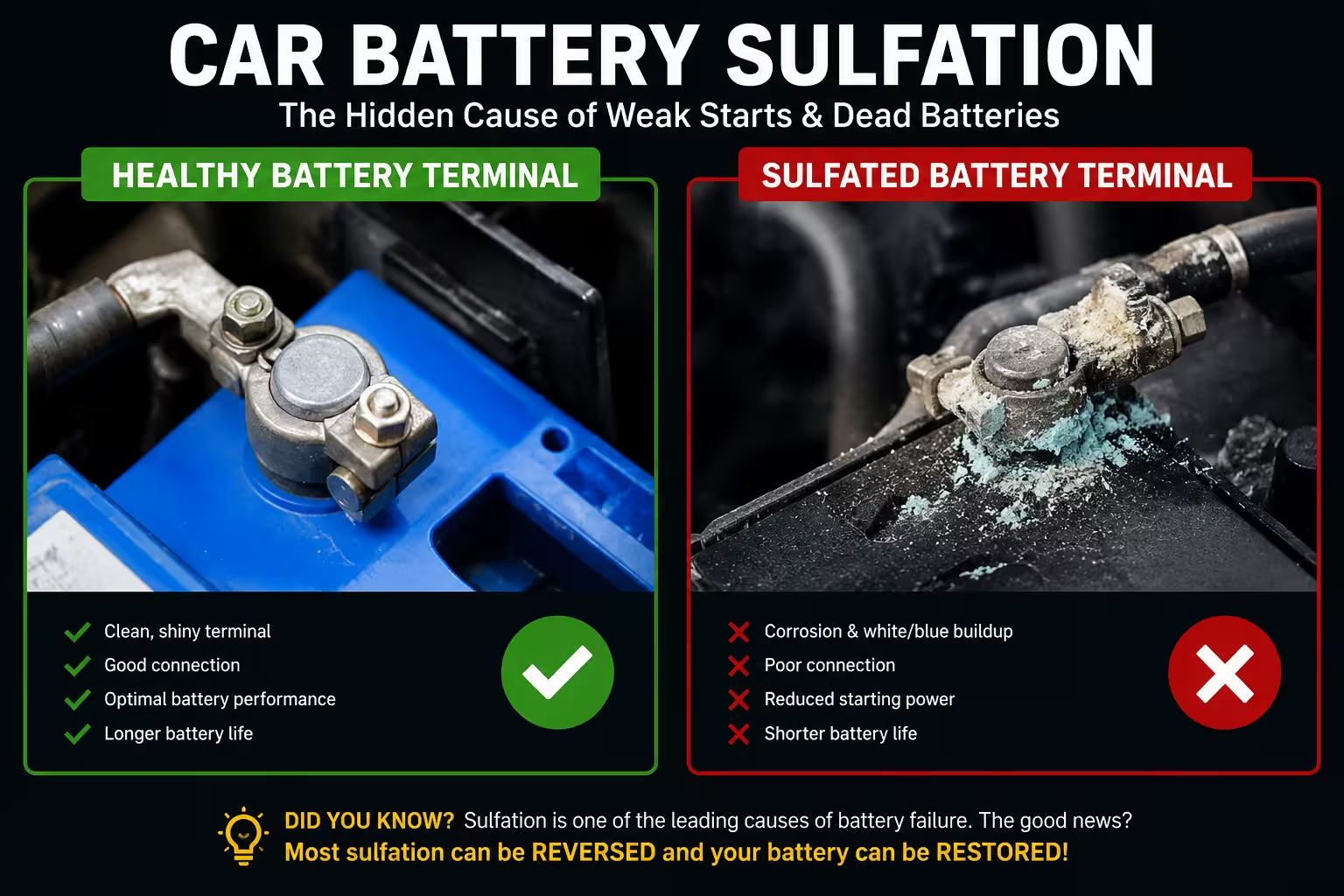
Quick Answer — What Is Battery Sulfation?
Battery sulfation is the accumulation of lead sulfate crystals on the internal plates of a lead-acid battery. It occurs when a battery sits in a partial or fully discharged state. The crystals harden over time, reducing the plate area available for chemical reaction — which shrinks capacity, increases internal resistance, and eventually prevents the battery from starting a car or holding any charge. Soft sulfation is fully reversible. Hard sulfation can be partially reversed. Only a shorted cell is truly dead.
85%
Battery failures caused by sulfation
70%+
Sulfated batteries that can be restored
$0–15
Cost to recondition at home
24hrs
Typical reconditioning time
In This Guide
The Science
What Is Battery Sulfation — Explained Simply
Every lead-acid car battery — which covers the vast majority of vehicles on the road across the United States — works through a reversible chemical reaction. Lead dioxide plates and pure lead plates sit in a sulfuric acid solution (the electrolyte). When you start the car, the plates react with the acid, producing electricity. When the alternator charges the battery back up, that reaction reverses.
The problem: the reversal is never 100% perfect. Every charge cycle leaves behind a small residue of lead sulfate on the plate surfaces. Under normal use, these soft crystals dissolve back into the electrolyte during charging. The trouble starts when the battery spends time in a partially or fully discharged state.
In that discharged state, the soft lead sulfate crystals begin to harden and grow — transforming into a crusty, insulating layer that coats the active plate surface. Think of it like plaque in an artery. The crystal buildup physically blocks the chemical reaction from happening across the full plate area. Capacity shrinks. Cranking power drops. Charging takes longer. And eventually, the battery can't start your car on a cold morning in Minneapolis or a hot afternoon in Phoenix.
Industry research consistently shows sulfation accounts for an estimated 70 to 85% of all lead-acid battery failures worldwide — and across the United States, it is the single biggest reason drivers spend $150–$350 on a replacement battery they didn't need.
✅ Healthy Battery
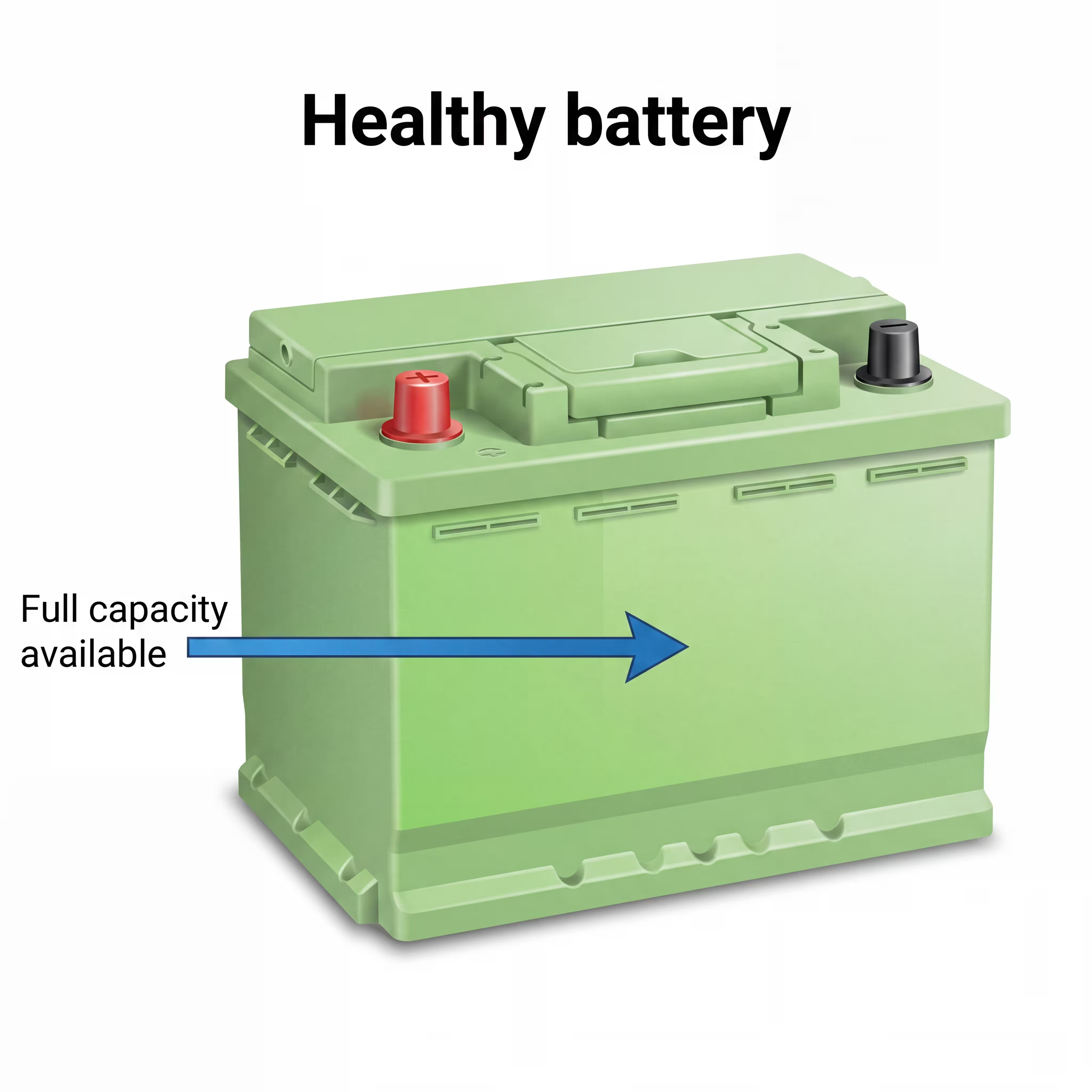
Clean lead plates with maximum surface area exposed to the electrolyte. Full chemical reaction capacity. Delivers 100% of rated Cold Cranking Amps.
⚠️ Sulfated Battery
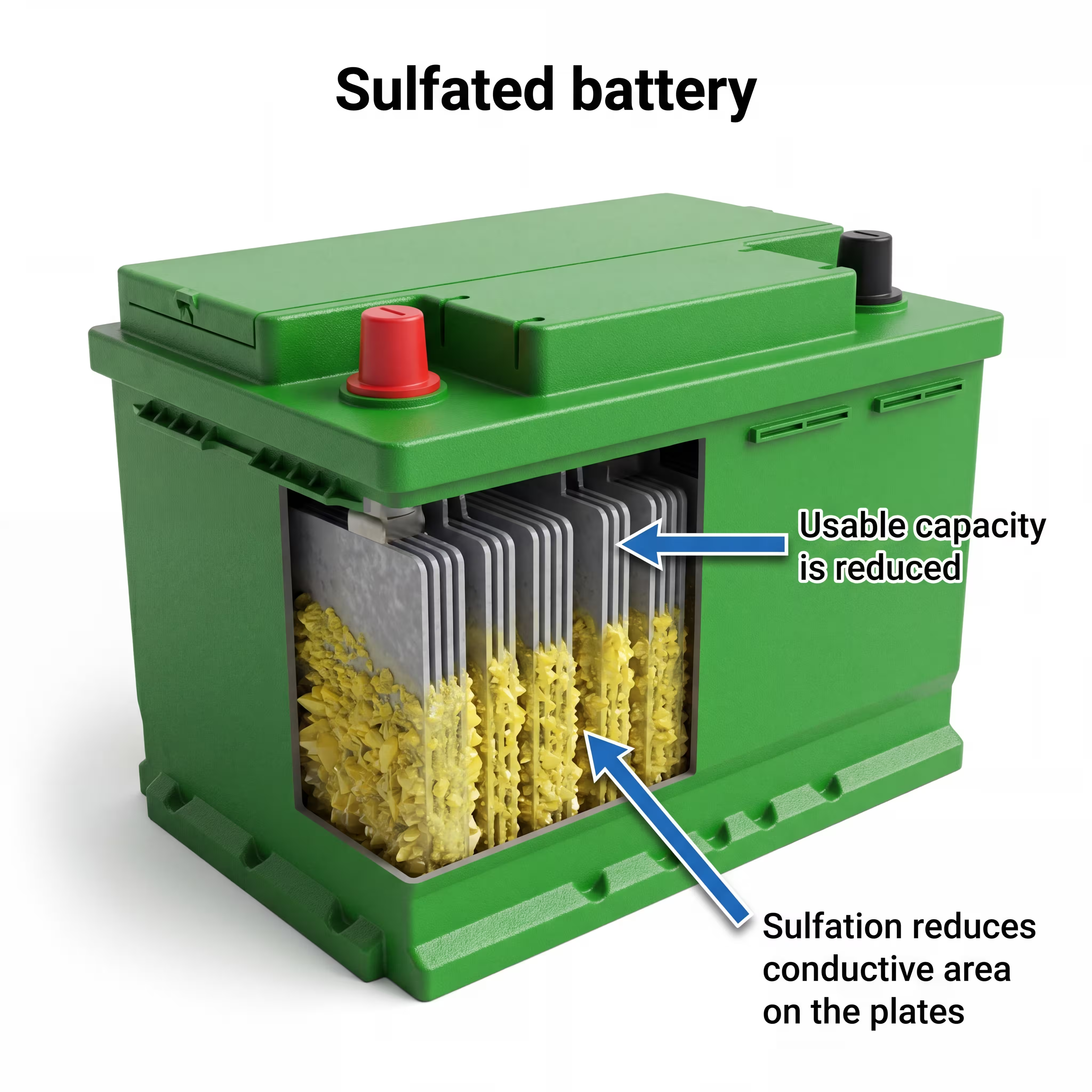
Lead sulfate crystals coat the plate surface, blocking the chemical reaction. Usable capacity is dramatically reduced — often to 30–50% of original rating.
Reversible vs Permanent
Two Types of Battery Sulfation — One Is Fixable
Soft Sulfation
Soft lead sulfate crystals have formed on the plates but have not yet hardened. The battery still accepts a charge and reads a reasonable voltage. This is the most common type across the United States — and it is fully reversible with a proper slow-charge reconditioning cycle. Most batteries that "die" on a winter morning in Chicago or a summer afternoon in Dallas are in this stage.
Voltage range:
11.5V – 12.4V
Resting voltage after 2-hour rest
→ Fully reversible — reconditioning restores 70–90% capacity
Hard Sulfation
Hard lead sulfate crystals have grown large and deeply embedded in the plate structure over weeks or months of low charge. The battery reads below 11.5V or below 10.5V. A severely sulfated battery may have one or more shorted cells. Partial restoration is sometimes possible with professional desulfation equipment, but full recovery is unlikely. Replacement is typically necessary at this stage.
Voltage range:
Below 10.5V
One or more cells may be shorted
→ Difficult to reverse — professional assessment or replacement
Root Causes
What Causes Battery Sulfation — The 6 Real Triggers
Sulfation doesn't happen randomly. These are the six most common triggers across the United States — and most of them are completely preventable.
Leaving Battery in Partial Charge
The most common cause in the USA. Short city trips (under 15 min) don't allow the alternator to fully recharge the battery. The battery spends days or weeks at 80–90% charge — the perfect condition for sulfation to begin.
High Temperature Storage
Heat dramatically accelerates sulfation. A battery stored in a hot garage in Texas or Arizona — especially over summer — can sulfate severely in 60–90 days. For every 10°F above 75°F, the self-discharge rate doubles.
Extended Parking Without Driving
A car parked for 2+ weeks self-discharges through parasitic loads (alarm, computer, GPS). At 50% charge, sulfation begins within days. Classic scenario: airport parking, seasonal vehicles, or second cars across the USA.
Undercharging / Faulty Alternator
A failing alternator that outputs less than 13.8V never fully recharges the battery. The battery runs chronically undercharged — sulfation builds cycle by cycle until the battery fails completely.
Deep Discharge Without Recharge
Leaving lights on overnight or running accessories with the engine off drains the battery to near zero. If that deep discharge is not reversed within 24–48 hours through a slow charge, severe sulfation sets in quickly.
Cold Weather Exposure
Cold slows the chemical reaction and makes the battery harder to fully charge. Batteries in northern US states (Minnesota, Michigan, Wisconsin) spend entire winters in a partial charge state — ideal conditions for sulfation buildup.
Warning Signs
8 Symptoms of a Sulfated Battery — Don't Ignore These
Most sulfation symptoms appear 2–6 weeks before complete battery failure. American drivers who catch these signs early can restore the battery instead of replacing it.
Slow Cranking
Engine turns over slower than normal, especially on cold mornings.
Poor Charge Retention
Battery drains quickly after charging — won't hold voltage overnight.
Dim Headlights at Idle
Lights visibly dim when idling but brighten when revving.
Long Charge Times
Smart charger takes 20+ hours to reach full charge on a battery that used to charge in 4–6 hours.
Excessive Heat
Battery gets unusually warm during charging — sulfated plates create resistance and heat.
Voltage Drops Under Load
Reads 12.4V at rest but drops below 9.6V within 15 seconds of load testing.
Electrical Accessories Erratic
Power windows slow, radio resets, interior lights flicker — classic low-voltage sulfation signs.
Won't Accept Charge
Smart charger immediately shows 'full' or 'fault' — battery isn't accepting current.
⚡ Voltage Diagnostic — Is Your Battery Sulfated?
Test resting voltage (2hrs after driving). Compare below:
| Resting Voltage | Charge State | Sulfation Level | Action |
|---|---|---|---|
| 12.7V+ | 100% | None | Healthy — maintain and test annually |
| 12.5–12.7V | 75–100% | Minimal | Good — slow charge and retest |
| 12.4–12.5V | 50–75% | Early Stage | Slow charge 8hrs + reconditioning cycle |
| 12.0–12.4V | 25–50% | Moderate | Reconditioning — high success rate |
| 11.5–12.0V | 0–25% | Severe | Deep reconditioning or professional help |
| Below 10.5V | Dead Cell | Permanent | Replace — shorted cell confirmed |
DIY Fix — Step by Step
How to Fix a Sulfated Battery at Home
This is the process thousands of American drivers use to restore sulfated batteries before spending $150–$350 at the auto shop. Works on standard lead-acid, AGM, and deep cycle batteries.
Test Resting Voltage First
Let the car sit for 2 hours after last use. Set your multimeter to DC voltage (20V range). Touch red probe to positive terminal (+) and black to negative (−). Record the reading. Anything between 11.5V and 12.4V is a strong reconditioning candidate.
💡 Test in the morning before the first start for the most accurate resting voltage reading.
Check for Physical Damage
Inspect the battery case for swelling, cracks, or leaking acid. A swollen or cracked battery is venting dangerous gas and must be replaced — do not attempt reconditioning. Terminal corrosion (white/blue powder) is normal and should be cleaned with a baking soda paste before proceeding.
Slow Charge at 2A for 8–24 Hours
Connect a smart charger on the lowest setting (2A). Slow charging allows sulfated plates to gradually accept current and dissolve some crystals back into the electrolyte. A battery that rises above 12.4V after a full slow charge is a confirmed reconditioning candidate. If it won't rise above 11V after 8 hours, a cell is likely shorted.
💡 Never fast-charge a sulfated battery — rapid charging generates heat that permanently hardens sulfate crystals.
Perform a Load Test
After the slow charge and a 2-hour rest, use a load tester to apply 50% of the battery's CCA rating for 15 seconds. A reconditionable battery holds above 9.6V. Below 9.6V under load means insufficient capacity — but reconditioning can often fix this over multiple charge/discharge cycles.
Run Reconditioning Charge Cycles
A proper reconditioning process involves controlled charge and discharge cycles that progressively break down the lead sulfate crystal layer. Each cycle restores more of the plate surface. Most sulfated batteries require 3–5 full cycles over 24–72 hours to recover 70–90% of original capacity. The complete step-by-step cycle parameters are detailed in the free presentation below.
💡 Results vary by sulfation severity. Batteries with 12.0–12.4V resting voltage respond best — typically restoring to reliable cold-cranking performance.
Desulfation Methods — Compared
| Method | Cost | Effectiveness | Best For |
|---|---|---|---|
| Slow Charge (2A smart charger) | $0 (if you own one) | Good | Early-stage soft sulfation |
| Multi-cycle Reconditioning | $0–15 (supplies) | Excellent | Moderate sulfation — most common case |
| Pulse Desulfator Device | $25–80 | Very Good | Moderate to severe sulfation |
| Epsom Salt Treatment | ~$3 | Moderate | Flooded lead-acid only — not AGM |
| Professional Desulfation | $50–150 | Good | Severe cases with specialist equipment |
| New Battery | $100–350+ | N/A | Permanent hard sulfation / shorted cell only |
Prevention
How to Prevent Battery Sulfation — 5 Habits That Work
Keep Voltage Above 12.4V Always
Use a battery maintainer ($25–50) whenever the car is parked for more than a week. Essential for Americans in hot climates (Texas, Arizona, Florida) and cold climates (Minnesota, Michigan) where natural discharge is fastest.
Drive at Least 30 Minutes Weekly
Short city trips don't fully recharge the battery. A 30-minute highway drive once a week brings the battery to 100% charge and prevents the partial-charge state that triggers sulfation. This single habit can add 2+ years to battery life.
Clean Terminals Every 6 Months
Corrosion adds electrical resistance that prevents full charging from the alternator. A quick baking soda paste cleaning every 6 months — especially before winter in northern US states — keeps the charging system working properly.
Store in a Cool, Dry Location
Never store a battery in a hot garage over summer. Keep temperature below 75°F (24°C). For vehicles stored seasonally — common in northern US states — remove the battery and keep it on a maintainer indoors.
Test Annually After Year 3
AAA recommends annual load testing starting at year 3 in warm climates and year 4 in cool climates. Free at AutoZone, O'Reilly, and Advance Auto Parts across the USA. Catch early sulfation before it becomes irreversible.
⚠️ The #1 Rule American Battery Experts Agree On:
Never store a lead-acid battery without a full charge. A battery sitting at 50% charge in a hot garage over summer — common across the southern United States — can sulfate so severely in 60–90 days that reconditioning becomes very difficult. Keep it above 12.4V at all times. For every 10°F above 75°F, the battery's self-discharge rate doubles.
In Today's Free Presentation
Thousands of Americans Are Bringing Their Batteries Back to Life
A battery engineer developed a complete reconditioning method that works on sulfated batteries — and 23 other battery types. He is currently offering free access to the full presentation.
Bring Old Batteries Back to Life
The complete reconditioning method for lead-acid, AGM, deep cycle, and 21 other battery types.
Save Money — Buy Fewer New Batteries
Restore a battery for $0–15 instead of paying $100–350 for a replacement. Thousands of American drivers do this every year.
Used by Drivers Worldwide
The reconditioning method is already being used by drivers across the United States and in over 180 countries.
Turn Old Batteries Into Profit
Learn how to buy cheap old batteries, recondition them, and sell them for a nice profit — a real side income for American DIYers.
Free to watch · No credit card · Available now for USA drivers
Get the Battery Reconditioning Cheat Sheet — Free PDF
The quick-reference guide thousands of American drivers use to test, diagnose, and recondition any lead-acid battery at home. Covers 12V car batteries, golf cart batteries, deep cycle, and AGM — one page, print-ready.
- ✓Voltage diagnostic chart — know your battery state in 60 seconds
- ✓Step-by-step reconditioning checklist for 6 battery types
- ✓Epsom salt formula + distilled water ratios
- ✓Red flags that mean replace — not recondition
No spam. Unsubscribe anytime. Sent instantly to your inbox.
Frequently Asked Questions
What is battery sulfation and how does it happen?
Battery sulfation is the buildup of lead sulfate crystals on the internal plates of a lead-acid battery. During normal discharge, lead sulfate forms on the plates as part of the chemical reaction. When the battery is properly recharged, these crystals dissolve back into the electrolyte. However, when the battery sits in a partial or fully discharged state, the crystals harden and grow — eventually blocking the plate surface and reducing battery capacity. It is responsible for approximately 85% of premature battery failures in the United States.
Can a sulfated battery be saved?
In most cases, yes — if caught at the soft sulfation stage (resting voltage above 11.5V). A proper reconditioning process involving controlled slow charging and discharge cycles can break down the lead sulfate crystals and restore 70–90% of original capacity. Hard sulfation (below 10.5V, with shorted cells) is generally not reversible and requires battery replacement.
How do I know if my battery is sulfated or just discharged?
Test the resting voltage 2 hours after the last use. A discharged-but-healthy battery reads below 12.4V but rises above 12.6V after a slow charge and stays there. A sulfated battery reads low (11.5–12.4V) and either refuses to rise above 12.4V after charging, or rises but drops quickly during a load test. A multimeter is enough for initial diagnosis; a load tester gives a definitive answer.
How long does it take to desulfate a battery?
A mild case of soft sulfation can be partially addressed with an 8–12 hour slow charge. Full reconditioning — the multi-cycle process that progressively restores plate surface area — typically takes 24 to 72 hours across 3 to 5 charge-discharge cycles. Patience is critical: attempting to speed up the process with fast charging can permanently harden the crystals and make recovery impossible.
Does Epsom salt fix a sulfated battery?
Epsom salt (magnesium sulfate) dissolved in distilled water can be added to flooded lead-acid batteries (not AGM or sealed batteries) to reduce electrolyte resistance and support desulfation. It is not a guaranteed fix and works best on mild sulfation. It should not be used as a substitute for a proper reconditioning cycle — it works best as a supplement to slow charging.
How can I prevent battery sulfation?
The most effective prevention is keeping your battery at full charge at all times — above 12.4V resting voltage. Use a battery maintainer if the vehicle is parked for more than a week. Take a 30-minute highway drive weekly if you only do short city trips. In hot US climates, park in the shade or a garage to reduce heat-accelerated self-discharge. Test voltage annually with a multimeter and load test after year 3.
Is battery sulfation covered under warranty?
Typically no. Battery warranties in the United States (including from AutoZone, Walmart, and OEM manufacturers) cover manufacturing defects — not sulfation damage, which is considered the result of improper maintenance or usage. This is one of the key reasons reconditioning is so valuable: it addresses the most common real-world failure mode that warranties don't cover.
Does sulfation affect AGM batteries differently than regular batteries?
Yes. AGM (Absorbed Glass Mat) batteries are more resistant to sulfation than flooded lead-acid batteries because they are typically sealed and better maintained from the factory. However, they are not immune — chronic undercharging (from stop-start driving or a weak alternator) will still cause sulfation in an AGM battery. AGM batteries also cannot be treated with Epsom salt. Reconditioning an AGM battery requires a charger with a dedicated AGM mode.
Related Battery Guides for American Drivers
How Long Does a Car Battery Last?
Average lifespan by battery type, climate zone, and driving habit across the USA.
Complete Battery Reconditioning Guide
The full process for restoring 24 battery types at home.
How to Fix a Degraded Battery
Step-by-step guide to reversing battery capacity loss.
Fix a Dead Car Battery
What to do when your battery won't start — before you replace it.
Battery Not Holding Charge
Diagnose why your battery keeps dying and fix it.
Car Battery Dies in Cold Weather
Why cold exposes sulfation damage — and what to do.
Your Battery Is Probably Not Dead
If It Reads Above 10.5V — It Can Be Reconditioned
The reconditioning method works on sulfated lead-acid, AGM, deep cycle, and 21 other battery types. Thousands of American drivers use it every year instead of paying $200 at the auto shop. The full step-by-step process is available in a free presentation — right now.
Watch The Free Presentation →Free · No credit card · Available right now for USA drivers